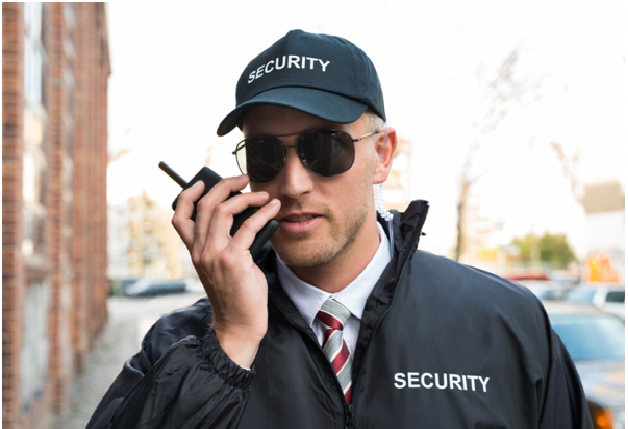
Event security breaches rarely happen because organizers didn’t care about safety. They happen because the security team on-site wasn’t equipped, trained, or certified to handle real threats. The single most effective way to reduce the danger of a security breach at your event is to hire a certified security company in Beverly Hills & Santa Monica CA that combines licensed guards, documented risk assessments, and proven emergency protocols — not just uniformed staff standing near the entrance.
Access Control Security (ACS) has provided professional event security service throughout Beverly Hills, Santa Monica, and the greater Los Angeles area for more than 26 years. In that time, the company has built its reputation on one simple principle: prevention beats reaction. A well-trained, BSIS-certified guard who can spot a problem before it escalates is worth far more than a large team that only responds after something has already gone wrong.
This article breaks down exactly why certification matters, what a professional event security provider actually does behind the scenes, and how to choose the right company for your next gathering — whether it’s a red-carpet premiere, a corporate gala, a wedding, or a large public festival.
Understanding the Real Risks of Unsecured Events
Every event, regardless of size, carries some level of risk. The scale of that risk depends on the venue, the guest list, the presence of VIPs or public figures, alcohol service, and how many people are expected to attend. When events don’t have adequate protection, several predictable problems tend to surface:
- Theft and vandalism — Unattended entrances and blind spots around a venue create opportunities for opportunistic theft of personal belongings, equipment, or cash-handling areas.
- Unauthorized access — Without proper credential checks, uninvited guests, protesters, or even paparazzi can slip past weak checkpoints and disrupt the event.
- Crowd control failures — Poorly managed crowd flow at entrances, bars, or stages can lead to congestion, panic, or injury, especially at high-attendance events.
- Altercations and disorderly conduct — Alcohol, high emotions, or tension between guests can escalate quickly if untrained staff don’t intervene early.
- Delayed emergency response — If staff don’t know evacuation routes or emergency protocols, a medical incident, fire, or security threat can turn into a far more serious situation.
- Reputational damage — A single security incident at a high-profile event can dominate headlines and damage the host’s brand or business long after the event ends.
These risks aren’t hypothetical — they’re the everyday scenarios that professional event security teams are trained to prevent. The difference between an event that runs smoothly and one that makes the local news for the wrong reasons often comes down to whether the security provider was properly certified and prepared.
It’s also worth noting that risk doesn’t scale in a straight line. A venue that hosts 50 guests in a private backyard has a very different risk profile than the same venue hosting 500 guests for a public ticketed event. Guest density, alcohol availability, the number of entry and exit points, and even the time of day all interact with one another to create compounding risk. An event that seems low-risk on paper — a small corporate mixer, for example — can quickly become high-risk if a well-known executive or public figure is added to the guest list at the last minute. This is exactly why experienced security providers insist on a fresh risk assessment for every event rather than relying on assumptions from a similar job done previously.
What “Certified” Really Means in Beverly Hills & Santa Monica
Not every company offering “security guards” is qualified to protect a high-profile event. In California, legitimate security officers and the companies that employ them must meet strict licensing standards. Understanding what certification actually involves helps event organizers separate serious professionals from companies that simply rent out uniforms.
BSIS Certification Explained
The Bureau of Security and Investigative Services (BSIS) is the state agency responsible for licensing security guards and security companies in California. A BSIS-certified guard has completed background checks, mandated training hours, and ongoing education requirements. This certification isn’t just paperwork — it’s the baseline that separates a professional guard from an unqualified bystander in a uniform.
At ACS, every guard assigned to an event is BSIS certified. That means each team member has been vetted, trained on the legal boundaries of their role, and educated on how to de-escalate situations without violating a guest’s rights or exposing the client to liability. For event organizers, this certification is the single most important credential to confirm before signing a contract with any security provider.
Beyond the initial licensing exam, BSIS also requires guards to complete continuing education on topics like use of force, cultural sensitivity, and legal liability. This ongoing training matters because laws and best practices around security work evolve over time. A guard who was certified years ago but hasn’t kept up with current requirements may not be equipped to handle today’s more complex event environments, particularly those involving social media exposure, public demonstrations, or heightened concerns around privacy and personal security.
Why Local Expertise Matters
Beverly Hills and Santa Monica present a unique security landscape. High-net-worth residents, celebrity clientele, dense pedestrian traffic, and frequent media attention all create conditions that differ significantly from event security in other parts of the country. A certified security company in Beverly Hills & Santa Monica CA understands local venue layouts, coordinates effectively with local law enforcement, and knows how to manage the specific pressures that come with high-visibility events in these cities — from managing paparazzi at a premiere to controlling access at a private estate gathering.
Local familiarity also means faster response times, better relationships with venue management teams, and a clearer understanding of city permitting and crowd capacity regulations. An out-of-town or unlicensed provider simply won’t have this contextual knowledge, and that gap can become a liability the moment something unexpected happens.
Local knowledge also extends to understanding traffic patterns unique to these cities. Beverly Hills events near Rodeo Drive, for instance, require careful coordination with valet services and street closures, while beachfront events in Santa Monica often need to account for pedestrian foot traffic from the pier and boardwalk. A security team that has worked dozens of events in these specific neighborhoods can anticipate these logistical challenges well before they become problems on event day, rather than discovering them for the first time when guests start arriving.
Core Security Strategies a Certified Company Should Implement
Professional event security isn’t just about placing guards at the door. It’s a coordinated system built on assessment, training, and technology. ACS applies a three-part strategy to every event it protects, and any certified security company worth hiring should be doing the same.
1. Conduct a Risk Assessment
Before deploying any guards, ACS security specialists walk the venue to identify sensitive spots, potential entry points, and areas that need extra coverage, then build a tailored security plan around those findings.
2. Train Staff on Emergency Protocols
Every ACS guard is trained to recognize suspicious behavior, respond to specific incident types, and safely evacuate guests. Staying alert throughout the entire event reduces the danger of a breach going unnoticed.
3. Utilize Security Technology
CCTV cameras, metal detectors, and biometric scanners give guards real-time visibility into potential threats, allowing for faster and more accurate intervention before an incident escalates.
Risk Assessment: The Foundation of Every Security Plan
A risk assessment is where every successful security plan begins. ACS security specialists physically walk through the venue ahead of the event to identify weak points: unlocked service entrances, poorly lit parking areas, narrow hallways that could create bottlenecks, or stages that draw large crowds close together. They also consider who is attending — a celebrity-heavy guest list changes the risk profile compared to a corporate networking event.
Once these vulnerabilities are mapped out, the team drafts a comprehensive security plan that assigns guards to specific zones, establishes communication protocols, and outlines contingency procedures. This isn’t a generic template applied to every job — it’s customized based on the venue, the guest count, and the nature of the event itself.
For example, a risk assessment for an outdoor estate wedding in Beverly Hills might reveal that the property has multiple unmonitored side gates, a pool area near where alcohol will be served, and only one primary driveway for both guest arrival and emergency vehicle access. Based on these findings, the security plan would assign dedicated guards to each gate, position a guard near the pool area during peak hours, and coordinate with valet staff to keep the driveway clear for emergency access at all times. This level of detail is only possible when the assessment happens on-site, in person, rather than being handled over the phone or through a generic questionnaire.
Staff and Attendee Training on Emergency Protocols
Even the best security plan is only as good as the people executing it. ACS guards go through structured training that covers behavioral recognition — learning to spot signs of intoxication, aggression, or unauthorized attempts to access restricted areas — along with clear response procedures for different incident types, from a medical emergency to a physical altercation.
Evacuation training is a critical part of this process. Guards need to know the fastest and safest routes out of a venue, how to communicate calmly with panicked guests, and how to coordinate with venue staff and emergency responders without creating additional confusion. This training reduces the danger of a security breach spiraling out of control simply because no one on-site knew what to do next.
This training is reinforced through pre-event briefings. Before every job, the assigned guard team reviews the venue layout, discusses the specific concerns identified during the risk assessment, and confirms roles and communication channels. This briefing ensures that every guard on-site — even those who haven’t worked that particular venue before — understands their assignment and knows exactly who to contact if a situation arises that requires backup or escalation.
Security Technology That Reduces Response Time
Technology doesn’t replace trained guards — it makes them more effective. CCTV systems give a security team eyes on multiple areas of a venue simultaneously, which is especially valuable at larger events where guards can’t be everywhere at once. Metal detectors and bag checks at entry points prevent prohibited items from ever reaching the event floor. Biometric scanning, when used for credentialed access, ensures that only approved guests, vendors, and staff enter restricted zones.
Used together, these tools give guards better situational awareness and let them respond to potential threats with more accuracy — rather than relying purely on visual observation across a crowded venue. Radio communication systems also play an underrated but essential role: when a guard at one entrance spots a suspicious individual, the ability to instantly alert every other team member across the venue means that person can be identified and monitored no matter where they move next. This kind of coordinated communication is often the deciding factor in whether a potential threat is contained early or allowed to escalate unnoticed.
Benefits of Hiring Access Control Security (ACS)
Event organizers in Beverly Hills and Santa Monica choose ACS for reasons that go beyond simply having guards on-site. Here’s what sets a fully certified, experienced provider apart from a generic staffing agency:
- Over 26 years of event security experience across a wide range of venues, guest lists, and event types throughout Southern California.
- 100% BSIS-certified guards who have completed state-mandated training, background checks, and licensing requirements.
- Custom security plans built around each venue’s specific layout and each client’s specific concerns — not a one-size-fits-all package.
- Full personalization of guard presence, uniform style, and coverage level to match the tone of the event, whether discreet or highly visible.
- Proven crisis response training that prepares staff to handle everything from crowd surges to medical emergencies calmly and efficiently.
- Local market knowledge of Beverly Hills and Santa Monica venues, traffic patterns, and coordination with local authorities.
- Availability for a wide range of event types, from intimate private gatherings to large-scale public functions.
This combination of experience, certification, and flexibility is exactly what separates a dependable event security service from a provider that simply fills a staffing quota. Clients working with ACS also benefit from consistent point-of-contact management throughout the planning process, meaning organizers aren’t left coordinating with a different representative every time they have a question or need to adjust the security plan as event details change.
How to Choose the Right Certified Security Company
Not all security providers are created equal, and the wrong choice can leave your event exposed to exactly the risks you were trying to avoid. Use the following criteria when evaluating a potential security partner for your next event in Beverly Hills or Santa Monica.
- Verify BSIS licensing for both the company and its individual guards — ask to see documentation, not just a verbal assurance.
- Ask about experience with similar events — a company that regularly handles weddings may not have the same crowd-control expertise needed for a large public festival.
- Request a sample risk assessment or security plan to see how thoroughly they evaluate a venue before the event date.
- Confirm training standards, including how guards are trained to handle emergencies, de-escalate conflicts, and coordinate evacuations.
- Check what technology they use, such as CCTV monitoring, communication systems, or access control tools, and how it integrates with their guard presence.
- Ask about local coordination — does the company have established relationships with local law enforcement and venue managers in the area?
- Look for flexibility and personalization — your event has unique needs, and a security plan should reflect that rather than following a generic template.
Taking the time to vet a security company properly before your event is far less costly — in every sense — than dealing with the aftermath of an incident that a qualified team could have prevented. It’s also worth asking prospective providers about their insurance coverage and how they handle liability if an incident occurs despite their best efforts. A reputable company will carry adequate liability insurance and be transparent about how claims or disputes are typically handled, which protects both the event host and the guests in attendance.
Types of Events That Require Professional Security
Almost any event that brings a group of people together benefits from a visible, professional security presence. However, some event types carry higher inherent risk and require a more robust security plan. The table below outlines common event categories and the primary security concerns associated with each.
Each of these event categories requires a slightly different security approach, which is why a customized security plan — rather than a generic staffing package — makes such a significant difference in outcomes. Even within a single category, the right approach can vary significantly. A 50-person fundraiser held in a private home, for instance, calls for a far more discreet security presence than a 500-person fundraiser held in a hotel ballroom with press coverage, even though both fall under the same general event type.
Common Security Breach Scenarios and How Certified Guards Respond
Understanding how a trained security team actually handles a breach helps illustrate why certification and preparation matter so much. Here are a few realistic scenarios and how a properly trained team responds.
Scenario: An Uninvited Guest Attempts to Enter
At events with a controlled guest list, someone without an invitation or credential may try to talk their way past the entrance. A trained guard checks credentials methodically, remains calm and polite, and redirects the individual away from the entrance without escalating the situation. Because ACS guards are trained specifically on de-escalation, this kind of encounter rarely turns into a confrontation.
Scenario: A Fight Breaks Out Near the Bar
Alcohol-related incidents are among the most common security concerns at private parties and corporate events. Certified guards are trained to intervene early — often before a verbal disagreement becomes physical — by separating the individuals involved, removing them from the immediate area, and involving venue management or law enforcement only if necessary.
Scenario: A Medical Emergency Occurs Mid-Event
When a guest experiences a medical issue, every second matters. Trained guards know the venue’s layout well enough to guide emergency responders to the location quickly, can provide basic first aid if certified to do so, and manage the surrounding crowd to prevent the situation from becoming more chaotic than it needs to be.
Scenario: Unauthorized Photography or Media Access
At high-profile events in Beverly Hills, unauthorized photographers or members of the press may attempt to access restricted areas. Security teams familiar with the local media landscape can identify credentialed press, politely redirect unauthorized individuals, and maintain the privacy boundaries the client expects — all without creating a public scene.
Scenario: A Suspicious Package or Unattended Bag
At larger public events, an unattended bag or package near an entrance or stage area can be a genuine safety concern. Trained guards are taught not to touch or move suspicious items but instead to secure the surrounding area, alert other team members through radio communication, and coordinate with venue management or law enforcement to assess the situation properly. This measured, procedure-driven response prevents both unnecessary panic and the risk of an untrained staff member inadvertently making a dangerous situation worse.
In each of these scenarios, the difference between a minor inconvenience and a serious incident almost always comes down to how well the security team was trained and how quickly they recognized the problem. This is precisely why certification, training, and experience aren’t optional extras — they’re the core of what makes event security actually work.
Frequently Asked Questions
What does BSIS certification actually guarantee?
BSIS certification confirms that a guard has passed a background check, completed state-required training hours, and is legally licensed to work as a security officer in California. It doesn’t guarantee perfection, but it does establish a baseline of accountability and training that unlicensed staff simply don’t have.
How far in advance should I book event security?
For most private events, booking a few weeks in advance gives the security company enough time to conduct a proper risk assessment and build a customized plan. For larger public events or high-profile gatherings, earlier booking — often a month or more ahead — allows time for more detailed venue coordination and permitting review.
Can security guards be customized to match the tone of my event?
Yes. ACS offers full personalization of guard presence, from formal attire for upscale galas to more discreet, plain-clothes coverage for events where a visible security presence isn’t desired. The security plan is built around the client’s preferences as much as the venue’s risk profile.
Do small private events really need professional security?
Even smaller private gatherings can benefit from professional security, particularly if alcohol is served, high-value items are present, or the guest list includes people who may draw unwanted attention. A brief risk assessment can help determine whether a smaller event needs one or two guards or a larger coordinated team.
What’s the difference between hiring a certified company and an independent guard?
A certified company like ACS carries liability insurance, enforces consistent training standards across its entire team, and can scale staffing up or down based on event size. An independent, uncertified guard may lack proper licensing, insurance coverage, or the backup support needed if an incident requires additional personnel.
Does ACS coordinate with local law enforcement in Beverly Hills and Santa Monica?
Yes. Local experience means ACS understands how to work alongside law enforcement when needed, whether that involves traffic coordination for a large event or direct communication during a security incident that requires police involvement.
How many guards does my event actually need?
The right number of guards depends on guest count, venue layout, the number of entry and exit points, and the overall risk profile of the event. As a general guideline, larger venues with multiple access points and higher guest counts require proportionally more coverage, but the only reliable way to determine the right staffing level is through an on-site risk assessment rather than a generic ratio applied without context.
What happens if my event runs longer than scheduled?
A professional security company builds flexibility into its staffing plans and can typically extend guard coverage if an event runs past its scheduled end time. It’s best to communicate this possibility with your provider ahead of time so they can plan guard shifts accordingly and avoid any gaps in coverage during the final hours of the event.
Final Thoughts: Prioritize Certification Before Your Next Event
Reducing the danger of a security breach at your event isn’t about hiring the biggest team or the most intimidating-looking guards — it’s about hiring a certified, experienced security company that knows how to assess risk, train its staff, and use the right technology to stay ahead of problems before they happen. ACS has spent more than 26 years refining exactly this approach for events across Beverly Hills, Santa Monica, and the surrounding areas, and every guard on the team is BSIS certified and trained to the standard that high-profile events demand.
Before you finalize plans for your next event, take the time to confirm that your security provider is properly certified, experienced with events similar to yours, and willing to build a security plan tailored to your specific venue and guest list. That single decision can be the difference between a smooth, successful event and one that ends up dealing with an entirely preventable incident.
Protect Your Next Event With a Certified Security Team
Request a quote for event security, store protection, and business security guard services throughout California and Arizona.
To request a quote for store and business protection and other security guard services in California and Arizona, call Access Control Security at 877-482-7324 or visit accesscontrolsecurity.com to get a quote.